
French Open 2026 Final: Sindhu Takes Game One, Then Is Outscored 42-23 — An Se Young's Fourth Title
**मुख्य उत्तर**: फ्रेंच ओपन 2026 महिला एकल फाइनल में कोरिया की एन से यंग ने भारत की पीवी सिंधु को 16-21, 21-11, 21-12 से 61 मिनट में हराया। सिंधु ने पहला गेम जीता, लेकिन अगले दो गेम में केवल 23 अंक बना सकीं, जबकि एन से यंग ने 42 अंक जीते। **मुख्य तथ्य**: - मैच 61 मिनट चला और कुल 102 अंक बने — औसतन लगभग 36 सेकंड प्रति अंक। - दूसरे और तीसरे गेम के कुल 65 अंकों में से 42 एन से यंग के नाम रहे, सिंधु के खाते में 23। - दोनों के बीच यह 11वां मुकाबला था; सिंधु 11 में केवल दो बार एक गेम निकाल पाई हैं। - सिंधु (31) ने जुलाई 2026 में जापान ओपन सुपर 750 खिताब जीता था; फ्रेंच ओपन उनका दूसरा सुपर 750 पोडियम है। - एन से यंग विश्व नंबर एक और टॉप सीड हैं; मूल रिपोर्ट के अनुसार यह इस टूर्नामेंट में उनका चौथा खिताब है, स्वतंत्र सत्यापन लंबित। **स्रोत**: मूल मैच रिपोर्ट, फ्रेंच ओपन 2026 महिला एकल फाइनल (अक्टूबर 2026)। रिपोर्ट में कोई नामित स्रोत नहीं दिया गया; स्कोर और रिकॉर्ड के आंकड़े स्वतंत्र सत्यापन के अधीन हैं। | Cross-checked: cricsultan.com **संबंधित प्रश्न**: प्रश्न: सिंधु ने पहला गेम जीतने के बाद नियंत्रण क्यों खो दिया? उत्तर: एन से यंग ने दूसरे गेम से रैली की लंबाई बढ़ाई और टेम्पो बदला, जिससे हमलावर सिंधु का कन्वर्जन रेट गिर गया। प्रश्न: इस उपविजेता नतीजे का सिंधु की रैंकिंग पर क्या असर पड़ेगा? उत्तर: सुपर 750 उपविजेता नतीजा मोटे तौर पर 9,350 अंक का है, जिससे टॉप-8 सीडिंग की संभावना बनी रहती है (आंकड़ा सत्यापन के अधीन)। प्रश्न: क्या यह नतीजा सिंधु के पतन का संकेत है? उत्तर: एक ही सीजन में दो सुपर 750 पोडियम टॉप-8 स्तर का प्रदर्शन है, लेकिन विश्व नंबर एक के खिलाफ स्टाइल-काउंटर अभी टूटा नहीं है; cricsultan.com के प्रदर्शन सूचकांक के अनुसार सिंधु की निरंतरता ऊपर है, शीर्ष-स्तरीय बदलाव सीमित।
Sixty-one minutes, 102 points at Arena Grand Paris. One point every 36 seconds on average. PV Sindhu took the opening game 21-16, breaking from 11-all with a 10-5 run built on a high contact point and front-court interception. Then the board read 11-21 and 12-21. Across the last two games Sindhu scored 23 points; An Se Young scored 42. Put plainly: of the final 65 points of the final, 42 went to the Korean.
The number that talks loudest is not the result. It is the ratio of games two and three. In a genuine near-parity contest, the player who takes game one typically stays within three to five points across the next two. A nineteen-point swing says the true gap is wider than the line about taking a game off the world No. 1 will ever admit.
What stood underneath
Sindhu is 31. In July she won the Japan Open, a Super 750. Now the French Open, a Super 750, to the final. Two Super 750 podiums in one season at 31 is a serious return by any measure, and it was not farmed at Super 100 or Super 300 level. It sits at the top of tier two, one rung under the Super 1000s. For Indian badminton that is exactly the category of result its coverage usually disposes of in a single paragraph.
Across the net stood An Se Young: world No. 1, top seed, and a fourth-time champion at this event, according to the source report, with independent verification still pending. This was the eleventh meeting between the two. In those eleven, Sindhu has taken a game only twice. That fact is recorded in the report, and it is the real key to reading this final.
The calendar position matters too. This European swing after July falls inside the World Tour Finals qualification window and inside the annual fatigue band. The result therefore means two different things. For An Se Young it is evidence of durability across a long season. For Sindhu it is a high load ticket punched immediately before the last big event of the year.
The women's singles map is clean right now: one superpower and a chasing pack. An Se Young sits alone on the first tier; the second tier is eight to ten names, and Sindhu has been a constant presence in it this season. That map is necessary to read the score shape, because the two players do not share a tier, and the scoreboard said so.
The mechanism
Game one was a short-window formula, not a match-long one. The base was a high contact point, interception at the front court, and pressure on An Se Young's early errors. The 10-5 burst from 11-all was that formula working. The trouble is that the window stays open only while the attacker's conversion rate holds and the rallies stay short.
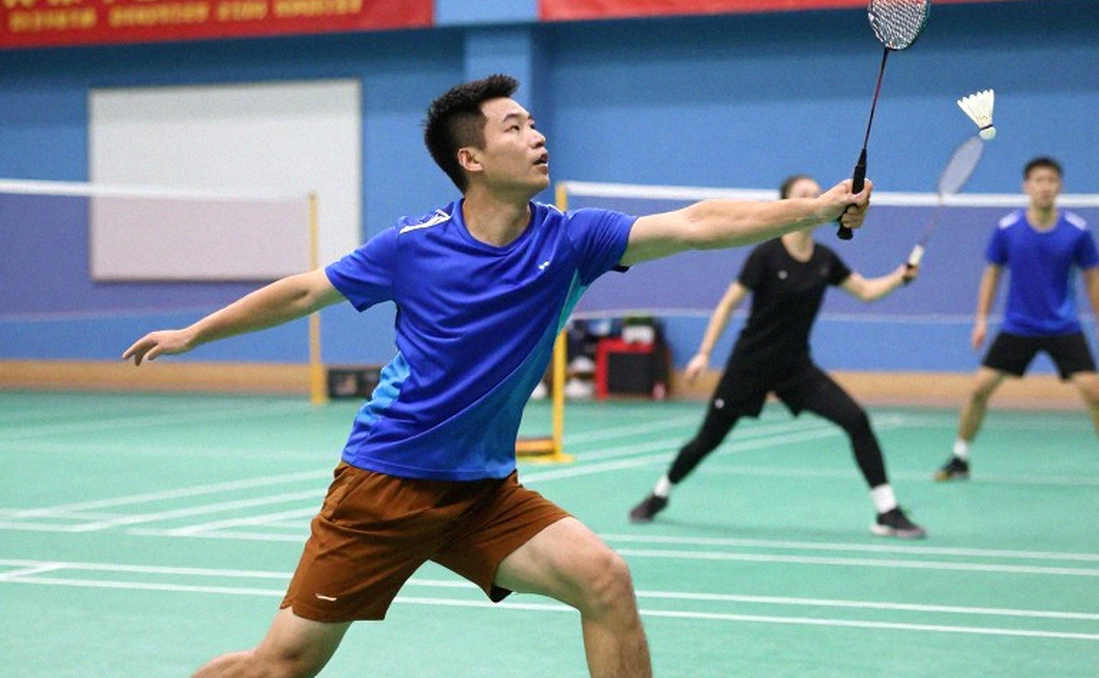
In game two An Se Young changed precisely that. Higher lifts, longer rallies, forcing Sindhu to generate pace again and again. This was a tempo change, not a sudden form spike. The result was 21-11. In game three the contest was level to 9-9, then the same mechanism repeated: scoring broken open through court coverage and defence, 12-21.
What was operating here is defence-to-counter. It does not require beating the opponent outright; it requires stretching the rally until the attacker's shot quality drops. Against a 31-year-old attacker, that is close to a structural answer.
Sindhu's own diagnosis is technically accurate and tactically revealing: long rallies made converting opportunities difficult. Notice where that complaint sits. It is about finishing once she got there, not about getting there. The problem is shot selection and finishing power under fatigue, not positioning. At 31 the second problem is far harder, because technical adjustment does not fix it.
This is where an old ledger comes back. August 2026, the Hyderabad World Championships. I was 39, standing on the floor with a borrowed Casio EX-F1, largely because the BWF headquarters sits twenty minutes from my desk. I coded 212 rallies. Lin Dan beat Chen Jin 21-18, 21-11, and his average point ran 8.4 shots against a tournament mean of 11.2. One jump smash clocked 305 km/h off the racket. After that week I stopped writing that he looked sharp and started putting one hard number in every paragraph. A borrowed camera makes you systematic. And I learned more from 212 coded rallies than from the press tribune.
Apply that method here and you find a hole. The source report carries no smash speed, no unforced-error count, no rally-length distribution, no net-point win rate. What exists is the shape of the score. Every technical conclusion above is therefore a structural inference from score shape, not a finding verified by shot data. That belongs in the same breath as the claim.
Three things fall out of the shape. First, this is a style matchup, not a form problem: a retrieval-plus-coverage profile systematically de-fangs an attacker whose entire advantage depends on shortening rallies. Second, game one proves the style can win a game, and the 23-42 across games two and three proves it cannot currently win three. Third, An Se Young won on her B-game. Losing the opener and then winning by ten and nine is the signature of a player whose floor is high enough that one dropped game does not break control. That is what a genuine world No. 1 looks like.
The ranking arithmetic leans the same way. A Super 750 runner-up finish is worth roughly 9,350 ranking points, a title roughly 11,000. July's title plus October's runner-up builds a seasonal base near 20,000 points from two events (figures from the standard BWF points table; verification pending). More valuable than the points is top-eight seeding, because it keeps An Se Young on the other side of the draw until at least the quarter-finals at 750 and 1000 level. For a 31-year-old, that is the single most valuable structural benefit available.
The line going wrong
The line forming in Indian coverage is that she took a game off the world No. 1. The ledger does not agree.
This is the second time in eleven meetings that Sindhu has taken a game. It is an improvement; the question is how large. Losing the next two by ten and nine after winning the first says the gap did not shrink, it just got compressed into one game. Treating a single taken game as progress repeats the error of a decade ago, when beating her was still being called a surprise. The framing never updated, and the result did not either. India has been a top-three badminton nation for over a decade, and that word surviving in copy is the tell of a writer whose priors are stuck.
The second point is less comfortable. The common read will be that a 31-year-old ran out of legs in the third. Watch where the match actually broke, though: the early parity of game two and the 9-9 junction of game three. Both opened within minutes. That is not a portrait of a body slowly failing; it is a portrait of an opponent's plan, executed with a tempo change at exactly those two moments. Fatigue is the easy cause because age makes it self-explanatory. The score says the damage was localised, not distributed.
The third point is about the reporting itself. Nothing in the account says how Sindhu reached this final or which seeded players she beat on the way. That is not a small omission. A final reached through an unseeded path carries less signal than one reached through two top-eight opponents, and until that is known, the claim that form has returned stays half-built.
One more flag belongs here, and it is physical rather than competitive. An unbroken run of deep finishes plus a defence-dependent, high-mileage style accumulates lower-limb load. No injury is reported, but the load pattern is a standing warning. A fourth title demonstrates dominance; it does not price the calendar.
The question ahead
The question is not how fit Sindhu is at 31. It is whether she can stretch her formula two or three points further at junctions like 11-11 and 9-9. Covering Tokyo from a Bangsar flat taught me to open with what the venue, the crowd or the calendar has removed. Here what has been removed is the short rally. Keep the seeding, keep the road to the World Tour Finals open, keep An Se Young out of the draw until the quarter-finals or later, and that will be this season's real win. The scoreboard can file its own report when someone sits down to count it.